Call For Free Consultation
(772) 794-1925Menu
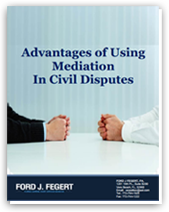 DOWNLOAD E-BOOK
Q: What is Mediation?
A: Mediation is a so called “alternative Dispute Resolution” method designed to settle a dispute in advance of trial in a court of law. It is designed to help the parties to reach an agreement (settlement) rather than risk a Judge or jury verdict.
Q: Why Mediate?
A: Mediation allows the parties to a dispute to control their own destiny and to fashion their own, jointly agreed upon resolution.
Q: Why is it advisable to have a Florida Bar Certified Admiralty and Maritime Attorney to mediate a maritime matter?
A: While Florida Certified Admiralty and Maritime Attorneys are required to be familiar with Florida Law, not all Florida attorneys are required to be familiar with Admiralty and Maritime Law. Admiralty and Maritime is a complex and unique regime. A Florida Board Certified Admiralty and Maritime attorney acting as your Florida Supreme Court Certified Mediator can help maximize the effectiveness and appropriateness of an agreed to resolution.
Q: What credentials set you apart as a medical malpractice mediator?
A: Along with Admiralty and Maritime, Medical Malpractice was a concentration of Ford J Fegert, Esq., who litigated several dozen med-mal cases and dozens more medical license defense matters. The work up of a complex personal injury or wrongful death matter can often be at the heart of each, as well as the reaction to issues presented to the trier of fact.
Q: Do you provide Mediation service remotely, such as through ZOOM?
A: Yes. Mediation through ZOOM or related services is always an option available to clients of FordFegertLaw. Remote mediation can result in cost savings and convenience, but it can also be at the expense of face-to-face contact, focus, and personal assessment. The use of remote mediation services is at the election, and upon the agreement, of the parties.
Q: Does FordFegertLaw have conference rooms available for in-person mediation?
A: Yes. There are several well-equipped and furnished, comfortable conference rooms available for mediation conferences, as well as for breakout sessions.
Q: How long has Ford J Fegert, Esq., been providing mediation service?
A: He was first appointed as a mediator by Court in 1999. Prior to that he had been an active participant as counsel to numerous parties in a variety of mediation, and before both State and Federal Courts of law. Ford J Fegert, Esq., has been a Florida Supreme Court Certified Mediator since 2004.
Q: Does FordFegertLaw charge for travel time to and from mediation conferences?
A: No. Travel time and expenses are not generally charged for mediations in South, South Central, Greater Orlando, and Coastal Florida. For other areas, any travel time or expenses would be the subject of discussion and agreement.
Q: How much time should I set aside for the Mediation Conference?
A: The prevailing thought is that the longer amount of time set aside for a mediation conference, the greater the likelihood of resolution. Hence, many suggest setting aside an entire day. Others prefer scheduling an afternoon, but keeping the evening available, if needed. It is rarely advisable to schedule a meditation conference of three hours or less. However, the appropriate minimum time for a mediation conference is agreed to by the parties on a case-by-case basis.
Q: What kind of cases can be mediated?
A: Mediation has been proven effective in a wide variety of cases, ranging from family law and probate disputes among family members to complex commercial disputes and intellectual property matters.
Q: What happens during mediation in a civil case?
A: Civil mediation begins by exchanging some information with the mediator so that he or she understands the basics involved in the dispute. At the mediation, the mediator discusses the various benefits of mediation and gives an overview of the process, including telling the parties that the process is voluntary and confidential and the mediator’s role is to help the parties achieve an amicable settlement on the claim.
Q: What can a mediator tell a judge?
A: Because the mediation process is confidential, the mediator cannot discuss what was relayed in mediation. Instead, a mediator can only confirm that the parties mediated in good faith and were not able to reach a conclusion or that they reached an agreement that is incorporated into the written settlement agreement he or she presents to the judge.
Q: How long does a mediation last?
A: The length of mediation depends on the parties, the complexity of the dispute and the willingness to avoid litigation.
Q: What disputes can be mediated when it comes to Maritime?
A: Because judges prefer cases to be resolved out of court, many maritime cases can be mediated instead of litigated. Many maritime contracts call for alternative dispute resolution to be used if a dispute arises, and these cases may require mediation.